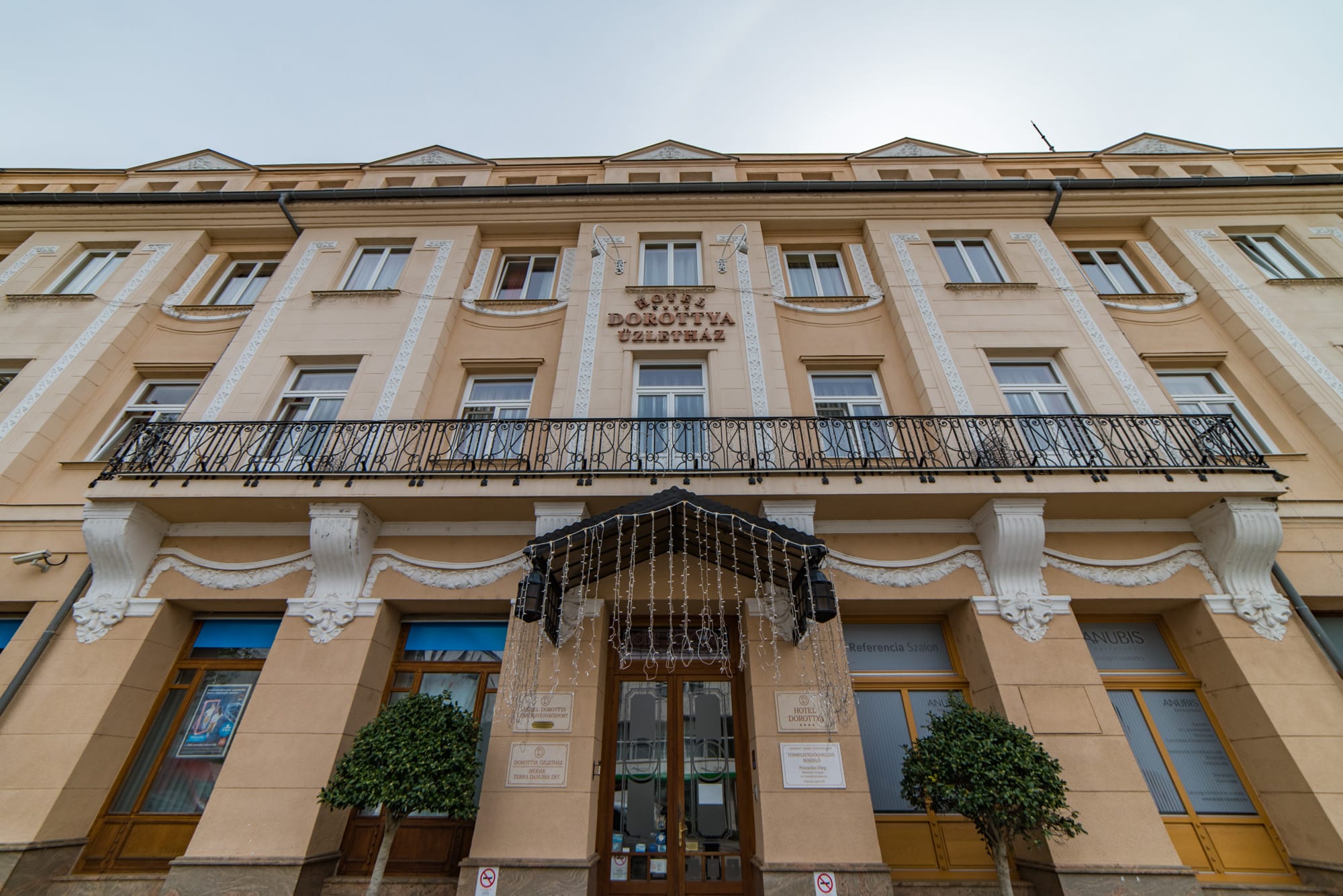
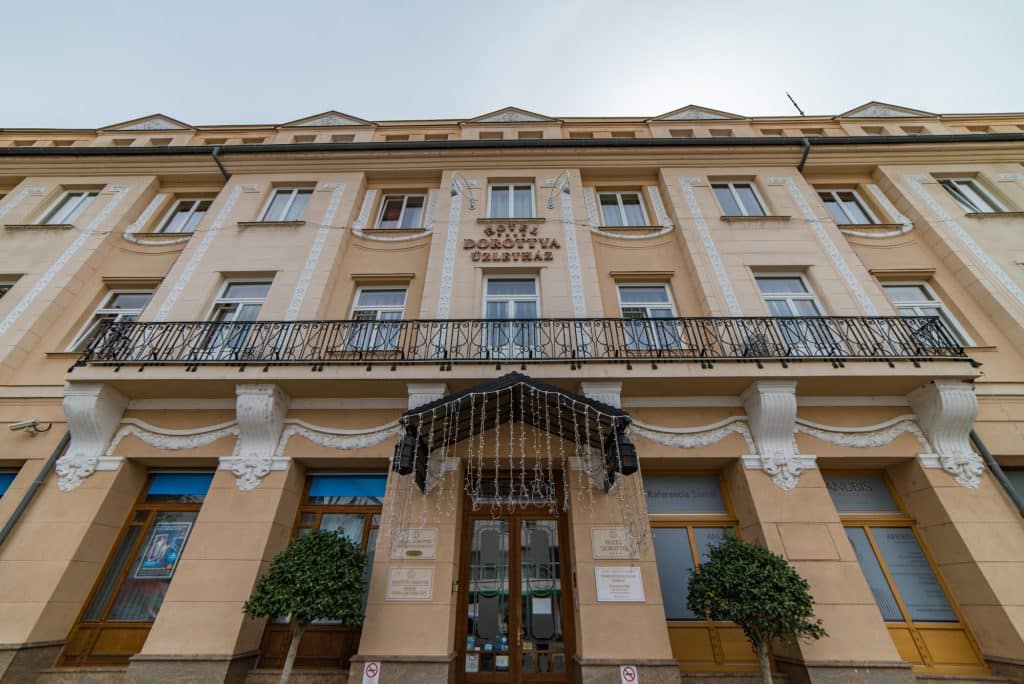
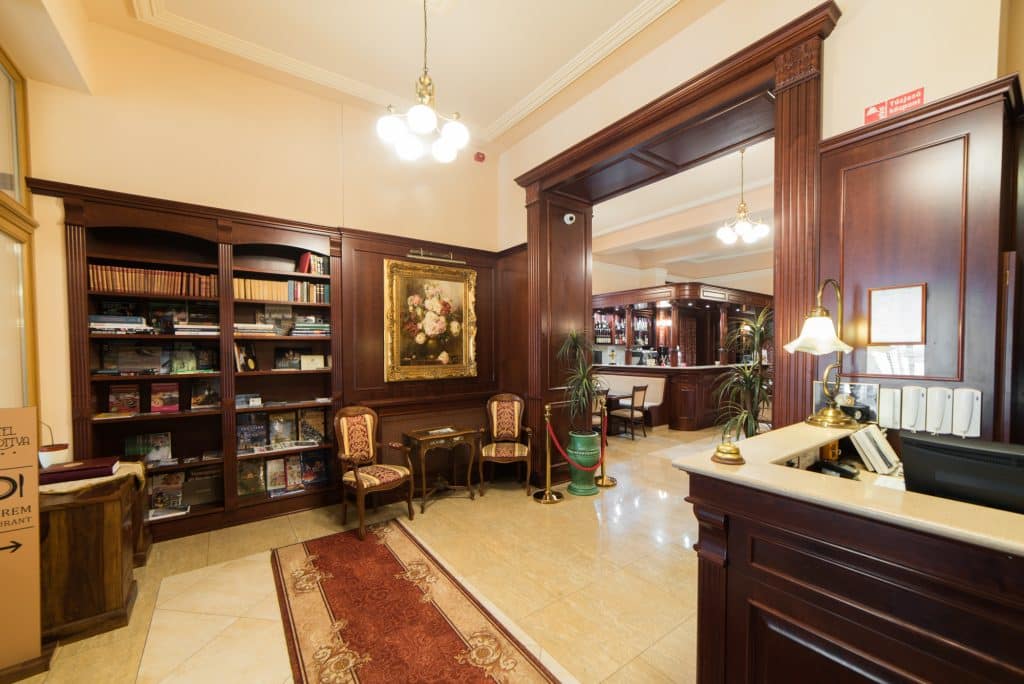
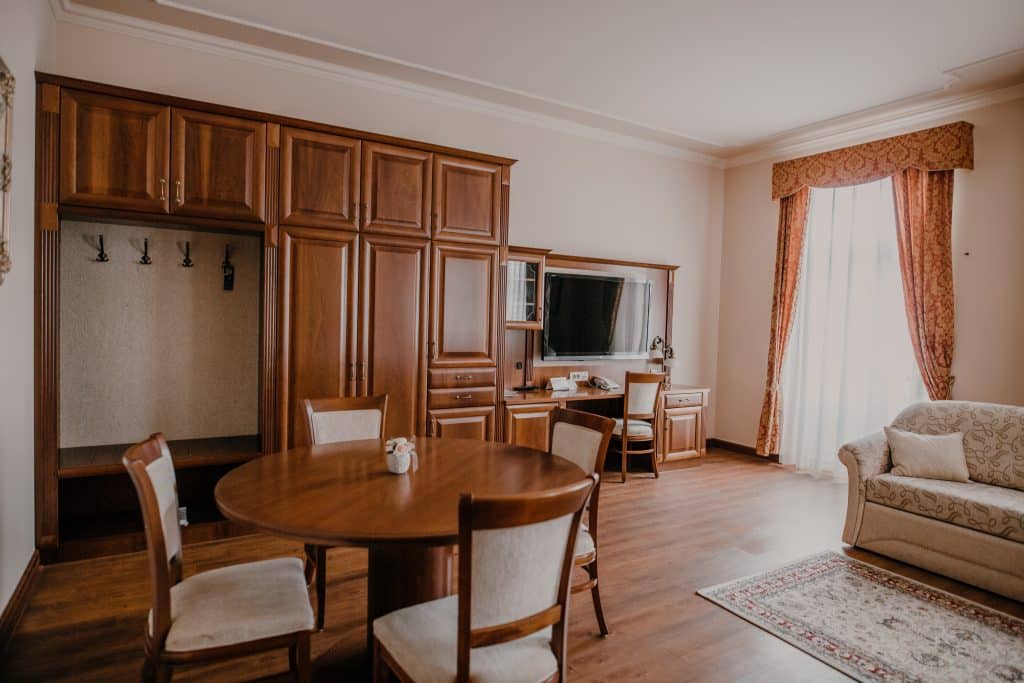
Dorottya House, named after the heroine of the Csokonai comic-epic, is located in the heart of Kaposvár, right in the historic city center. In the past, it seemed a bit far from the train station on foot, but nowadays, the hotel’s guests can enjoy the advantages of its location alone.
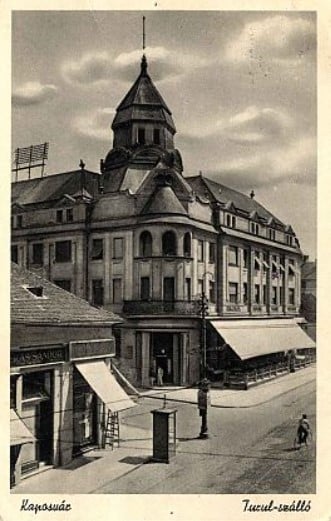
The hotel was originally called Turul Hotel. The first national emblem of the Hungarians, the Turul bird flag, came to the fore again on the occasion of the thousandth anniversary of the country’s existence, and was thus placed on the corner facade of the hotel being built at that time. In the line of Hungarian elements of Art Nouveau, the turul with outstretched wings appears as the majestic lord of the air, and at the same time the mythical animal connecting the earthly and celestial dimensions.
The building, which still strongly shapes the cityscape, is almost a glorification of Art Nouveau. The building’s decorations are thanks to the master stonemason and stonemason Imre Borovitz, of which experts highlight the female heads depicted above the attic as the most beautiful in the city. The characteristic flexible lines, tendrils, and flowers of Art Nouveau permeate the exterior and interior of the house, leaving no doubt about its fidelity to the style.
”“The hotel and the café were popular meeting places for the better-off bourgeoisie and the large landowners in peacetime. There was a café and a billiard room on the ground floor, and a restaurant in the basement. József Rippl-Rónai was a regular guest of the café, who also organized an exhibition here. His younger brother, Ödön Rippl-Rónai, held an artist’s table in the restaurant of the Turul Hotel. The pleasant and high-quality stay here was contributed by the fact that twenty to thirty Hungarian and foreign newspapers came to the café every day, which could be read on a special newspaper stand.”? Aurél Bernáth wrote in his book This is How We Lived in Pannonia.
MÓRICZ ZSIGMOND: RIPPL-RÓNAI JÓZSEF
In addition to Rippl-Rónai, many other famous people also stayed here, including Zsigmond Móricz, Zoltán Kodály, Lajos Áprily, Lajos Kassák, Lőrinc Szabó, Áron Tamási, and the world-famous gypsy musician Simpliciusz (original name József Barcza) from Kaposvár also entertained the guests on several occasions.
The outbreak of World War II completely transformed life in the hotel. The cultural excitement disappeared, and the previously bustling café life was almost forgotten. In the post-war period, the hotel was called the Béke Szálló, and during this time the Turul statue was replaced by a large red star in the line of ornaments, and the general condition of the hotel and the standard of services deteriorated undeservedly.
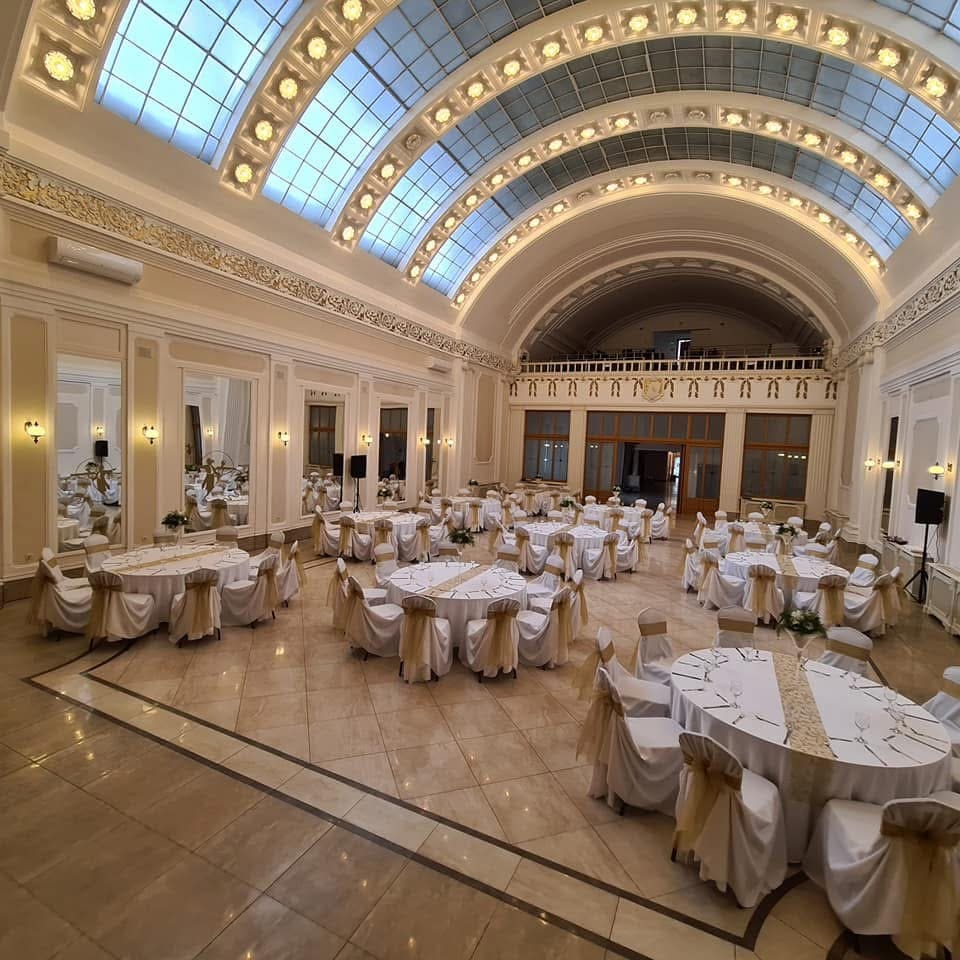
Nowadays, the hotel is called Dorottya, borrowed from the comic-epic by Mihály Csokonai Vitéz, and its unique Mirror Hall, which can accommodate 400 people, has been the venue for the Dorottya balls that have been held since 1960. It has been renovated several times since the Second World War, but real modernization, preservation of value, and restoration to a standard worthy of the original only took place during the most recent renovation, in 2011.
You can read about the building and history of the hostel on the website of the Takáts Gyula Library in the virtual presentation titled Secession in Kaposvár. (“In Hungarian only”)
- H. Molnár Katalin: A szecesszió Kaposváron ( 2021. October 8.)
- Past and present-day pictures of the hotel on the Art Nouveau Kaposvár map can be seen here:
H. Molnár Katalin, Bálint Imre: Kaposvár szecessziós épületei (2021. October 8.)
 English
 Magyar
 Deutsch